
Holiday Hosting and High-Traffic Floors: How to Set Up Repeat Cleaning
When children, guests, pets, and meal prep keep re-dirtying the same route, a repeat cleaning robot vacuum needs fresh-water mopping, reliable debris pickup, and a dock that reduces between-run chores. Narwal Flow 2 can be considered for larger kitchen-dining loops because its FlowWash track mop refreshes as it cleans, while 31,000 Pa suction can help collect crumbs, hair, and dry debris.

For larger homes with mixed routes, consider Flow 2; for recurring grease and dried sauce residue, consider Freo 20; and for low-clearance spaces and close edge coverage, consider Freo 20 Edge. A practical hosting routine is to clean the kitchen-dining-entryway route before guests arrive, after meals, and after departures, with the schedule adjusted for traffic, water capacity, and the amount of debris.
A successful holiday hosting floor cleaning plan separates recurring residue from urgent messes. Use the robot for planned passes around meals and arrivals, then remove pooled liquid or dropped food immediately before it can spread through the route.
Choose a Repeat Cleaning Robot Vacuum for Kitchen, Dining, and Entryway Traffic
A robot mop for high-traffic floors can help maintain hard-floor routes that become dirty several times a day. For larger mixed routes, Flow 2 combines suction, battery capacity, obstacle avoidance, and mop lifting; Freo 20 is geared toward heated washing for kitchen residue; and Freo 20 Edge addresses low-clearance and perimeter cleaning. Use the robot for recurring light debris and thin residue, not concentrated spills.
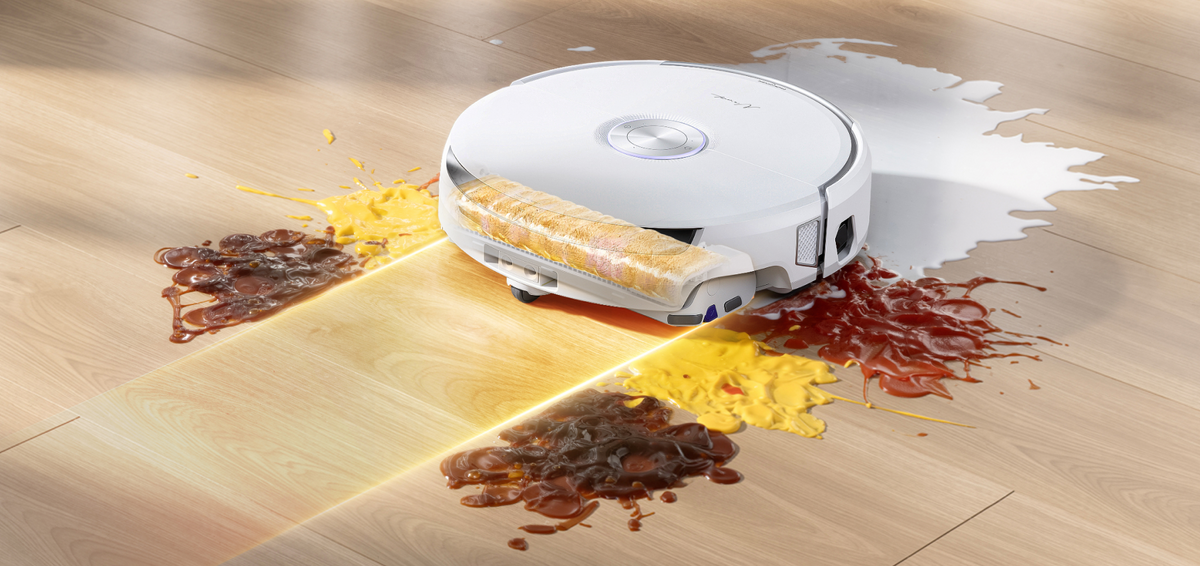
FlowWash uses a rolling track mop with continuous fresh-water flushing and onboard dirty-water collection, helping prevent grime from being carried from the kitchen into the dining area.
For most hosting households, the choice comes down to the mess type, the floor plan, the route’s obstacles, and the budget:
- Large homes with kids, pets, rugs, and scattered objects: Narwal Flow 2 combines 31,000 Pa suction, a 7,000 mAh battery, obstacle avoidance, and mop lifting for mixed routes. It sits in the flagship $1,000-plus tier.
- Kitchen-heavy routines with grease and dried sauces: Narwal Freo 20 uses a 60°C heated FlowWash roller track and 100°C station self-cleaning for hard-floor residue. It is positioned in the approximately $500–$800 range.
- Hard-floor loops with cabinet edges and low clearance: Narwal Freo 20 Edge pairs fresh-water track mopping with a 95 mm body, 10 mm mop lift, and extended edge reach. It is positioned at approximately $400.
- Immediate puddles and food spills: Narwal S20 Pro supports quick kitchen and entryway wet-dry cleanup before the next robot pass.
The hosting situations that need repeat cleaning
The kitchen-dining loop is often dirtier than the rest of the home because traffic keeps returning to it. Focus repeat runs on the route people actually use instead of treating every room as equally urgent.
- Children carrying snacks between the table and kitchen
- Guests tracking in moisture, grit, or leaves near the entrance
- Pets shedding hair or leaving paw marks around food bowls
- Chairs pushing crumbs and sauce droplets beyond the dining table
- Kitchen runners or rugs sitting beside wet-cleaned hard flooring
Step 1: Map the Kitchen Dining Loop Cleaning Route
Start with the path that gets dirty again within hours: the kitchen work zone, dining-table perimeter, beverage station, entryway, and connecting hallway. This approach can make kitchen dining loop cleaning more targeted than a full-home pass while people are actively moving through the house.
What to do
- Walk the route from the front door to the dining table.
- Mark hard-floor areas where crumbs, shoes, and chair traffic collect.
- Include the cabinet toe-kick line and table edges.
- Leave rugs and mats flat at transitions.
- Keep the dock’s return route open.
What to watch
Loose toys, packaging, charging cables, and bags can interrupt a repeat run. Flow 2 uses TwinAI Dodge obstacle avoidance and can recognize common household obstacles, including cables and toys; actual performance varies with the layout, object size, and floor conditions.
For narrow hard-floor routes, Narwal Freo 20 Edge has a 95 mm ultra-slim body that reaches beneath kitchen toe-kicks and low furniture, while its mop extends toward baseboards and furniture legs.
Step 2: Use Fresh-Water Mopping for Multiple Daily Passes
Repeat passes can be useful when the mop remains clean enough for the next mess. The practical advantage of a fresh-water track mop is that it refreshes during the route instead of dragging the same used surface across kitchen grease, coffee drips, and shoe residue.
What to do
- Run a vacuum-and-mop pass before guests arrive.
- Consider another pass after the main meal.
- Reserve a final pass for the entryway and connecting hallway.
- Remove large food pieces before the robot starts.
- Keep sticky spills from drying into a thick layer.
Why this matters
Narwal Flow 2 uses a FlowWash rolling track mop that self-cleans during mopping and uses heated water for messes such as grease, dried coffee, and muddy paw marks. Its 31,000 Pa suction can help collect snack crumbs, pet hair, and dry debris as part of the cleaning workflow.
For a busy home where children and pets repeatedly cross the kitchen-dining route, this combination can reduce the need to manually wash the mop between routine runs. Water levels, debris volume, and the amount of residue still affect how often hands-on maintenance is needed.
Step 3: Match the Robot Mop for High-Traffic Floors to the Mess
The best setup depends on whether your main problem is long coverage, greasy kitchen residue, or hard-to-reach edges. All three models use a fresh-water track-mop approach and can be matched to different priorities, including larger-home coverage, kitchen residue, or low-clearance edge cleaning.

| Hosting Need | Narwal Model | Relevant Features | Practical Fit |
|---|---|---|---|
| Large multi-room route | Narwal Flow 2 | 31,000 Pa suction, 7,000 mAh battery, FlowWash | Longer kitchen-to-entryway loops; flagship $1,000-plus tier |
| Sticky cooking residue | Narwal Freo 20 | 60°C FlowWash, 100°C dock cleaning | Grease, sauces, and dried spills; approximately $500–$800 tier |
| Low-clearance edge work | Narwal Freo 20 Edge | 95 mm body, 10 mm mop lift | Toe-kicks, baseboards, and chair legs; approximately $400 tier |
Narwal Flow 2 for high-volume household traffic
Narwal Flow 2 can suit larger homes where kids, pets, shoes, and dining activity create a mixed debris load. Its 7,000 mAh battery is designed for larger-home cleaning, including homes of about 3,000 square feet or more, while 31,000 Pa suction and the track mop support dry-debris pickup and wet-residue cleaning in one workflow. Actual coverage varies by layout, mode, floor type, and obstacles.

- Choose it for larger kitchen-dining-entryway loops.
- Use its mop lift when the route includes rugs.
- Clear disruptive floor obstacles before starting.
- Its noise-reduction design may be a consideration for households that prefer lower-distraction operation around guests.
Narwal Freo 20 for greasy kitchen cleanup
If the recurring issue is kitchen grease or dried sauces rather than route length, Narwal Freo 20 can be a priority option. Its 60°C heated FlowWash roller track is designed to loosen grease and dried sauces on hard floors, while 100°C station self-cleaning helps clean the roller and tray after use.
- Use it after food prep and the main meal.
- Focus the route on tile, sealed wood, or other hard floors approved for wet mopping.
- Remove dense food pieces before starting.
- Let the dock handle roller washing between routine runs.
Step 4: Set Up Zone-Focused Robot Cleaning Around Real Traffic
Zone-focused robot cleaning starts with defining where dirt returns most often. Kitchen and entryway cleaning can be prioritized through route planning, timing, obstacle control, and edge coverage; however, a true user-drawn zone routine requires explicit room or zone controls in the robot’s cleaning interface.
What to do
- Treat the kitchen, dining perimeter, and entryway as one repeat loop.
- Run the loop before guests arrive and after meals.
- Keep the route clear enough for a consistent return to the dock.
- Place mats flat so the robot can approach them predictably.
- Use a separate response for spills that are too large for a routine pass.
What matters for the kitchen and entryway
Flow 2 supports obstacle avoidance, strong suction, mop lifting, and four carpet-cleaning modes for routes that combine hard floors with rugs or mats. Freo 20 Edge can help near cabinets and chair legs because its slim body and extending mop are designed for close perimeter coverage.
For pet-related debris, Flow 2 and Freo 20 include Pet Care Mode 2.0, which adjusts cleaning around pet zones. It can adjust cleaning strategy for pet areas, while actual cleaning and obstacle performance depends on the object size, floor conditions, and selected settings.
Step 5: Build a Three-Pass Holiday Hosting Floor Cleaning Schedule
A robot vacuum for kids and pets can be most useful when each pass has one job. Instead of waiting until the end of the night, consider short repeat cycles around predictable traffic peaks.
Pass 1: Before guests arrive
Run the kitchen, dining route, and entryway before cooking begins. This clears dry debris and gives the hard floor a fresh starting point before shoes, chairs, food preparation, and pet traffic build up again.
- Pick up cables and small toys.
- Flatten kitchen runners and entry mats.
- Move bags away from the entry route.
- Clear large food debris first.
Pass 2: Immediately after the meal
Start the second pass after people leave the dining table. This can be a useful time for holiday hosting floor cleaning because crumbs, drink drips, chair-area debris, and sauce spots are still concentrated in one area.
- Sweep up large dropped food first.
- Return chairs to a consistent position.
- Prioritize the kitchen-dining loop.
- Keep foot traffic off freshly cleaned areas briefly.
Pass 3: After guest departures
Use the final pass for the entryway and its connecting hard-floor path. It can address shoe residue, pet hair, and remaining crumbs before they migrate into other rooms overnight.
Narwal Flow 2 reduces routine maintenance with hot-water mop washing, warm-air drying, and up to 120 days of dust storage in its base station. This can support repeat use over active hosting days, depending on debris levels, water capacity, and the cleaning schedule.
Step 6: Handle Big Spills Before the Robot Runs
A robot mop maintains the route; it should not be the first response to puddled drinks, soup, raw egg, or dropped food. Remove the concentrated spill first, then let the robot complete the follow-up wash around the surrounding traffic area.
What to do
- Pick up solid food with paper towels or a utensil.
- Remove pooled liquid before anyone walks through it.
- Clean the center of the spill with a wet-dry vacuum.
- Run the robot afterward for footprints and residue.
- Keep salty melted snow contained near the entryway.
Why a wet-dry vacuum helps
Narwal S20 Pro is designed for quick daily kitchen and entryway spill maintenance, making it a useful companion for sudden hosting messes. Use it for the immediate event, then use the repeat cleaning robot vacuum for the larger route once pooled material and large food pieces are gone.
Troubleshooting Repeat Cleaning During Holiday Hosting
| Problem | Likely Cause | Solution |
|---|---|---|
| Dining area looks dirty again | Continued meal traffic | Run a pass shortly after eating |
| Kitchen floor feels sticky | Dried grease or sauce | Use heated FlowWash cleaning where appropriate |
| Cabinet edges stay dirty | Limited mop reach | Use edge-extension cleaning |
| Robot pauses near entryway | Bags, cords, toys | Clear the travel path |
| Rug becomes damp | Mop reaches soft flooring | Use mop lifting mode |
Common mistake: waiting too long after dinner
A delayed cleaning pass gives sauce, grease, coffee, and drink residue time to dry. Start the post-meal run when the table clears, especially if children or pets continue to move between the kitchen and dining room.
Common mistake: treating every spill as a robot job
Large wet messes can spread through wheels, shoes, and foot traffic before a robot reaches them. Remove the concentrated spill first, then use the robot to clean the surrounding route and restore the hard floor. Avoid sending a robot directly through large liquid pools, glass fragments, sticky or tangled food, or floors that are not suitable for wet mopping.
Keep the Highest-Traffic Floors Ready for the Next Gathering
Repeat cleaning becomes more manageable when the kitchen, dining area, and entryway are treated as one practical route. Fresh-water track mopping can help later passes remain useful, while a three-pass schedule can limit the buildup of crumbs, grease, and tracked-in residue before the end of the night.
Narwal Flow 2 can suit long, mixed-floor routes with strong suction, obstacle avoidance, and a high-capacity battery. Narwal Freo 20 focuses on heated washing for kitchen grease, while Narwal Freo 20 Edge supports slim, close-to-the-wall cleaning for hard-floor loops.
FAQ
How many times per day can a robot mop clean a kitchen and dining area?
For an active hosting day, consider three passes: one before guests arrive, one after the main meal, and one after guests leave. The exact number depends on food debris, pet hair, foot traffic, battery level, water capacity, and the condition of the route. Keep each pass focused on the kitchen, dining perimeter, entryway, and connecting hallway to avoid unnecessary whole-home cycles while the highest-traffic areas keep getting dirty.
What type of robot mop is suitable for sticky kitchen floors?
A fresh-water roller or track mop can be suitable for sticky kitchen floors because it refreshes the mop surface during cleaning. Heated washing can help with grease, coffee, dried sauces, and similar residue. Remove dense food pieces and pooled liquids before the robot starts. Then run the robot across the surrounding hard-floor route to collect crumbs and wash the remaining film.
Can a robot vacuum clean only the kitchen and entryway?
A robot can prioritize the kitchen and entryway when its cleaning controls include room selection or user-defined zones. Without a specific zone control, a practical repeat loop can still be created by keeping the route clear and running it around meal and arrival times. Strong edge cleaning, obstacle handling, mop lifting, and fresh-water washing can improve results on that route. Those hardware features do not automatically create a manually drawn zone.
What matters most for an entryway cleaning robot?
An entryway cleaning robot benefits from strong dry-debris pickup, obstacle avoidance, edge reach, and a mop that can handle hard-floor residue near mats. Mop lifting also matters when the route includes rugs or carpet transitions. Keep shoes, bags, charging cords, and toys away from the main travel lane. A clear route can help the robot cover the threshold and hallway more consistently.
When should a wet-dry vacuum be used instead of a robot mop?
Use a wet-dry vacuum for puddled drinks, soup, melted snow, and other liquid messes that need immediate removal. Pick up large solid food pieces by hand first to reduce the risk of clogs and odors. For recurring crumbs, footprints, pet hair, and thin residue across a larger hard-floor route, a robot can serve as a daily maintenance tool. After the urgent cleanup, a robot pass can wash the surrounding floor.

