
Robot Vacuum and Mop Combos by Budget: What to Shortlist at Each Tier
Robot Vacuum Mop Combo by Budget: Start With the Chores You Want to Remove
A robot vacuum mop combo by budget should match your floor messes, carpet mix, and tolerance for dock maintenance—not simply offer the highest suction number. If daily crumbs, pet hair, and sticky kitchen residue are your main problems, the Narwal Freo 20 Robot Vacuum & Mop is a midrange shortlist option, typically positioned in the $500–$800 range, because its 60°C FlowWash roller rinses during cleaning while its dock supports mop washing, drying, automatic dust collection, and water refilling.
Budget tiers work best as an automation scale. Entry models handle scheduled vacuuming and light mopping but leave you with more pad, bin, and water-tank work. Many midrange systems add mapping, obstacle avoidance, mop lifting, and a self-maintaining dock, depending on the model. Higher-tier machines often provide more extensive navigation, edge-coverage, and stain-management configurations.
| Tier | Best fit | What matters most | Common trade-off |
|---|---|---|---|
| Entry | Apartments and lighter weekly messes | Simple scheduling, compact size, basic mopping | More hands-on pad and bin care |
| Midrange ($500–$800) | Mixed floors, pets, and recurring kitchen messes | Dock washing, reliable maps, carpet protection | Larger station footprint |
| Advanced ($1,000+) | Large, busy, cluttered homes | More extensive automation, detailed controls, edge reach | More features than simple homes may need |
Shortlist a Robot Vacuum Mop Combo by Budget: 7 Solid Options
For entry-level or previous-generation shopping, simpler Shark and eufy models and the prior-generation Narwal Freo S can suit lighter cleaning routines. In the $500–$800 segment, Narwal Freo 20 is a notable option for frequent kitchen messes, while the eufy X10 Pro Omni is worth comparing when mop lift for lower-pile rugs is a priority. At $1,000 and above, Narwal Flow 2 is a flagship-oriented option for larger homes and heavier pet- or child-related cleaning loads, with a claimed 31,000 Pa suction rating, a 7,000 mAh battery, and a FlowWash system that continuously introduces clean water and removes wastewater from the roller.
1. Shark and eufy for Simple Daily Cleaning
Shark and eufy make sense when you want routine floor pickup without making a large dock the center of your room. These brands are practical for smaller homes with mostly open pathways, light debris, and weekly rather than daily mopping. The main limitation is that lower-complexity systems usually need more regular attention to water tanks, pads, brushes, or dust bins. The Narwal Freo S is also a previous-generation, mop-pad option for lower-budget or simpler maintenance needs rather than a 2026 model.
- Best for: Apartments, studios, and homes with mostly hard floors.
- Useful features: Scheduled runs, app-based room selection, and basic vacuum-and-mop cycles.
- eufy comparison point: The eufy X10 Pro Omni is rated for 8,000 Pa suction and includes a 12 mm mop lift, which may reduce the risk of damp pads contacting some short-pile rugs.
- Watch-out: Basic mopping is better suited to maintaining already-clean floors than addressing dried sauce or greasy residue.
2. Narwal Freo 20 for Midrange Mopping Hygiene
If you want a midrange robot vacuum mop that balances vacuuming with frequent wet cleaning, Narwal Freo 20 is one option to consider. It uses a flattened roller that receives 60°C fresh water while cleaning, helping reduce the chance of repeatedly carrying soil across different areas.
- Best for: Pet homes, busy kitchens, dining areas, and frequent hard-floor cleaning.
- Mopping hardware: FlowWash uses a self-rinsing roller with water up to 60°C (about 140°F), a configuration intended for recurring kitchen residue and other wet messes.
- Hair handling: A conical zero-tangle main brush is designed to reduce hair wrapping, while the dynamic edge-extension arm supports cleaning along edges.
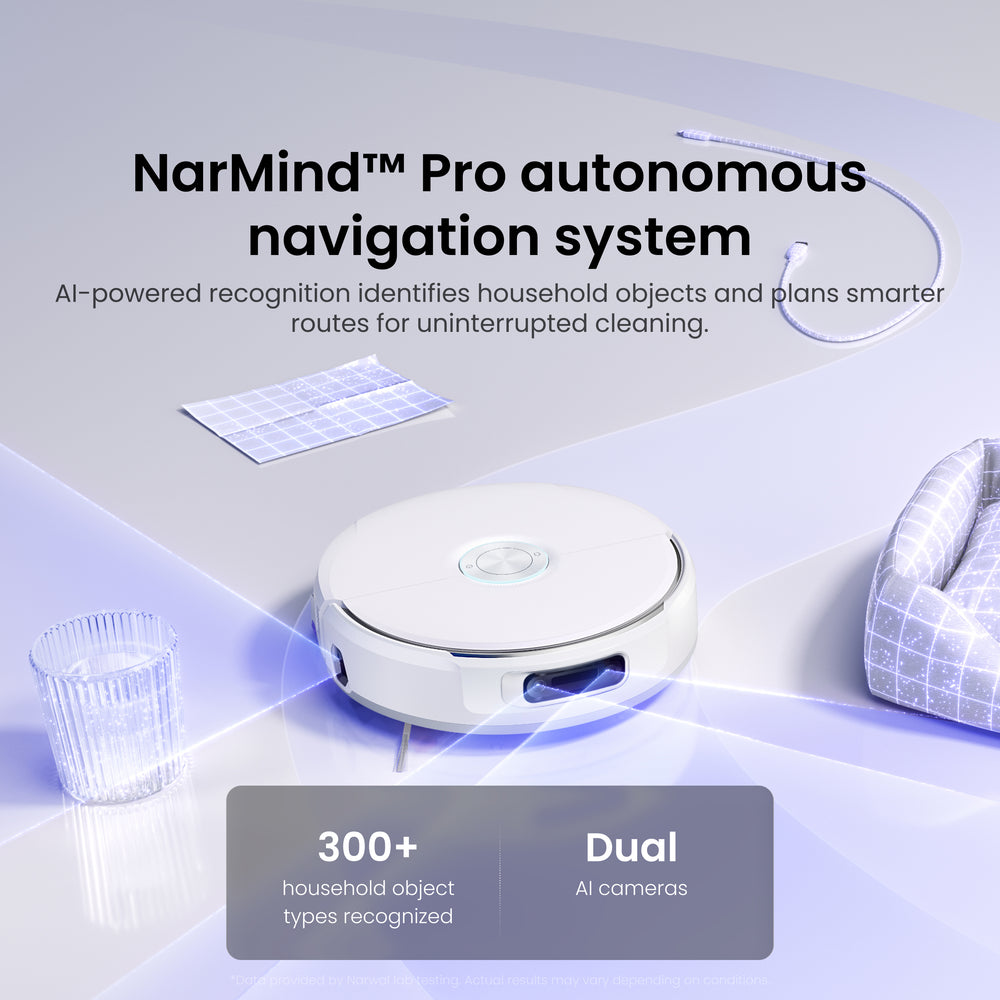
- Navigation: TwinAI Dodge uses dual-camera navigation and includes pet- and baby-protection modes. In suitable lighting and around recognizable objects, it can help the robot navigate around common household clutter such as shoes, cords, toys, and furniture legs.
- Dock routine: The dock includes a 100°C self-cleaning cycle, hot-air drying, automatic clean-water refilling, and a dust bag rated for up to 120 days of dust storage; actual intervals depend on household debris, hair, and cleaning frequency.
The practical trade-off is station space: the Freo 20 base needs a dedicated location rather than a narrow corner. For homes where mop washing, dust emptying, and water refilling would otherwise be recurring weekly tasks, its automated dock may provide more noticeable value.
3. Roborock for Detailed Mapping and Zone Control
The Roborock Qrevo S fits homes where you want to control room order, water flow, cleaning schedules, no-go zones, and carpet behavior in detail. It uses PreciSense LiDAR navigation, dual spinning mops, a 10 mm mop lift, and a multifunctional dock that washes, dries, empties, and refills.
- Best for: Multi-room homes with rugs, pet areas, and changing weekly schedules.
- Useful controls: No-go suggestions, room sequencing, adjustable water levels, and app-based plans.
- Cleaning hardware: Dual spinning mops support regular hard-floor maintenance.
- Watch-out: More settings can improve a complex routine, but they also take longer to tune than a simpler one-button cleaning plan.
For shoppers comparing Roborock with Narwal, the deciding question is simple: choose more granular route and zone controls when scheduling flexibility is the priority; when repeated sticky-floor cleaning is the bigger burden, consider a fresh-water roller system and compare the cleaning approach of each model.
4. Dreame for Feature-Dense Dock Automation
The Dreame L40 Ultra Gen 2 is a compelling option when you want broad dock automation, carpet-oriented vacuuming, and extending hardware for edges. Its PowerDock washes pads, empties debris, refills water, and dries mops, while its DuoScrub system uses dual rotating pads.
- Best for: Larger mixed-floor homes with pets, rugs, and furniture edges.
- Vacuuming: The robot lists up to 25,000 Pa suction and uses a 5,200 mAh battery.
- Carpet behavior: Its mops lift 10.5 mm, which may reduce wet-pad contact with some lower-pile rugs during vacuuming.
- Edge reach: The side brush and mop can extend into edges and around furniture legs.
- Watch-out: The feature list is extensive, so it may exceed the needs of a small home with simple weekly cleanup.
The dock earns its place when it removes real work, such as washing pads after regular kitchen cleaning or emptying collected pet hair. If your floors only need occasional mopping, a less elaborate system can be easier to place and maintain.
5. Ecovacs for Roller Mopping and Edge Coverage
The Ecovacs DEEBOT T90 MAX PLUS OMNI is worth shortlisting when you specifically want roller-mop cleaning without moving into a flagship-focused setup. The Ecovacs shop listing presents roller-mop, hot-water mop-washing, TruEdge coverage, and auto-emptying features across selected DEEBOT configurations.
- Best for: Hard-floor homes where reducing streaks and maintaining fresh mop contact are major priorities.
- Mop method: Some DEEBOT models with OZMO roller-mop systems rinse the roller during cleaning and use a scraper to remove remaining dirt.
- Floor coverage: TruEdge technology focuses on close wall and perimeter cleaning.
- Hair management: Selected DEEBOT configurations pair roller mopping with ZeroTangle brush systems.
- Watch-out: Roller-mop machines have more wet-cleaning parts than simple pad robots, so dock placement and routine tank care matter more.
Ecovacs and Narwal both deserve consideration when the mop system is the main purchase decision. Narwal Freo 20 emphasizes 60°C FlowWash with continuous fresh-water roller rinsing, while Ecovacs offers roller-equipped DEEBOT configurations with varying dock and edge-cleaning combinations.
6. Samsung for SmartThings-Centered Homes
The Samsung Bespoke Jet Bot Combo is most compelling when SmartThings already anchors your connected-home routine. Its All-in-One Clean Station supports charging and mop care, while the SmartThings app provides room maps, no-go zones, progress monitoring, cleaning modes, and station-status controls.
- Best for: Homes already using Samsung appliances and SmartThings automations.
- Useful controls: Map editing, room naming, exclusion zones, cleaning reports, and device monitoring.
- Cleaning approach: Spinning mop pads and an All-in-One Clean Station support regular hard-floor maintenance.
- Watch-out: Ecosystem convenience should not outweigh a poor fit for your actual floor messes, carpet layout, or preferred mopping method.
Connected cleaning also brings account and app security into the ownership experience. CISA recommends changing default passwords and enabling automatic software updates for smart-home devices, both of which reduce avoidable exposure on a home network.
How to Choose a Robot Vacuum Mop Combo by Budget
Match the Mop to the Mess
Passive pads work for light dust and occasional damp wiping. Spinning pads add scrubbing action for regular footprints and small spills. For kitchen grease, dried food residue, muddy paw prints, and homes where mopping runs several times a week, consider roller-mop systems that refresh the cleaning surface during operation.
Let Your Floor Mix Set the Priority
Carpet-heavy homes should prioritize brush design, suction behavior, carpet detection, and mop lifting. Hard-floor homes should place more weight on mop contact, water management, edge reach, and how well the dock keeps the mopping surface clean. In a mixed home, reliable transitions between rugs and tile often matter more than a single peak specification.
Measure the Dock, Not Just the Robot
A robot can fit under furniture while its station still dominates a hallway or kitchen wall. Measure the base footprint, tank access, and nearby outlet location before choosing a self-washing system. CPSC notes that battery incidents can occur during charging; follow manufacturer instructions and CPSC battery-safety guidance when placing, charging, and using the device.
Use Navigation as a Compatibility Test
Navigation matters most in active homes. LiDAR typically supports room mapping and structured routes, while camera- or AI-assisted avoidance can help around cords, pet bowls, shoes, toys, and chair legs. Performance varies by model, lighting, object shape, and home layout. A mostly clear apartment can work well with simpler navigation, whereas a family home may benefit from a robot that handles daily clutter with fewer interruptions.
Budget-Tier Scenarios That Make the Decision Easier
- Pet-heavy home: Prioritize an anti-tangle main brush, obstacle avoidance, strong dust handling, and a dock that can reduce hair-related upkeep.
- Busy kitchen: Consider a roller mop that refreshes itself during operation, plus heated mop washing or drying at the station.
- Small apartment: Prioritize a compact dock, manageable water tanks, dependable mapping, and quiet scheduled runs.
- Carpet-first home: Prioritize mop lifting, brush performance, targeted carpet cleaning, and room-by-room control.
- Smart-home setup: Prioritize the app ecosystem you already use, but keep cleaning hardware and dock behavior as the final decision factors.
Common Robot Mop Problems and Practical Fixes
| Problem | Likely cause | Practical fix |
|---|---|---|
| Streaks after mopping | Mop surface becomes dirty during a long run | Consider a self-washing dock or continuously refreshed roller mop, and clean the mop surface, water tank, and dock tray regularly |
| Missed edges and corners | Round robot shape or fixed mop placement | Prioritize extending mops, edge arms, or dedicated perimeter modes |
| Hair wrapped around brushes | Standard brush geometry and long hair volume | Choose anti-tangle rollers and shaped or reversing side brushes, while removing accumulated hair regularly |
| Robot skips rooms | Map, boundary, or door-access issue | Rebuild the route, revise room boundaries, and keep doorways clear |
| Damp rugs | Low mop lift or incorrect carpet settings | Choose a robot with carpet detection and sufficient mop lift for the thickness of your rugs |
FAQ
What features make a midrange robot vacuum and mop worth buying?
A capable midrange robot vacuum mop may provide reliable mapping, carpet-aware behavior, useful obstacle avoidance, and a dock that removes repeated cleanup steps. Self-emptying alone is helpful, but mop washing and drying can add more value when the robot mops several times a week. For pet homes, anti-tangle brushes and targeted room cleaning are often more useful than extra app effects.
Is a roller mop better than spinning mop pads?
For recurring sticky residue, a roller-mop system that refreshes its cleaning surface during a run can be worth considering. Spinning pads are effective for routine grime, footprints, and regular maintenance on sealed hard floors. The better choice depends on the specific model, the type of stains in your home, and whether you mainly need light upkeep or frequent wet cleaning after meals, pets, and active family traffic.
How often do robot vacuum and mop combos need maintenance?
Even self-maintaining robots need regular care, especially in homes with long hair, pets, or frequent wet cleaning. Empty or replace dust storage when prompted, refill clean-water tanks as needed, and remove visible hair from brushes before it builds up. Washable filters, sensors, wheels, and dock trays also benefit from periodic cleaning to support consistent navigation and suction.
Do robot vacuum mops work well in homes with pets?
Yes, provided the robot has anti-tangle brush design, solid obstacle avoidance, and enough dock automation for frequent cleaning. Pet homes benefit from daily vacuum schedules, room-specific runs around feeding areas, and mop systems designed to reduce the risk of carrying dirty water or soiled mop material between different areas. A robot still works best as a maintenance tool alongside occasional manual deep cleaning.
Should carpeted homes prioritize vacuum power or mopping features?
Carpeted homes should prioritize brush design, carpet detection, suction modes, and reliable mop lifting first. Strong mopping features matter more as hard-floor coverage increases, particularly in kitchens, entries, and dining rooms. For homes with both rugs and tile, prioritize models with sufficient mop-lift height or systems that can automatically remove or leave behind mopping hardware before crossing carpet.


